
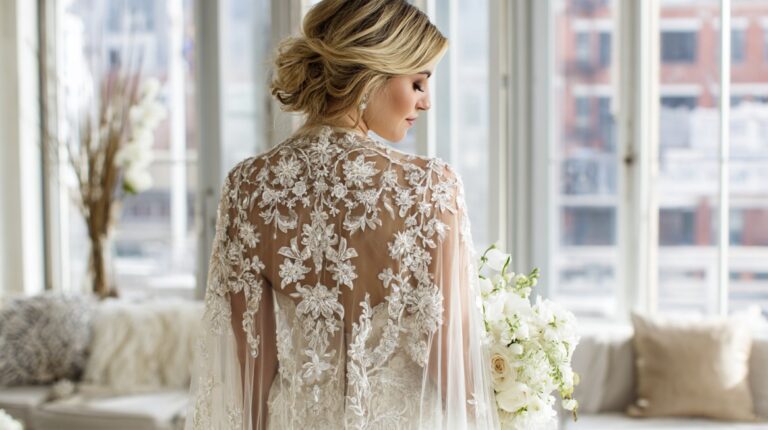
Bridal capes and overskirts are the easiest way to get two wedding looks without buying two full dresses. A bride can walk into the ceremony with volume, movement or drama, then remove one piece for dinner, dancing or a cleaner reception look.
The idea is practical. Many brides want the entrance moment of a gown, but they also want to move, sit, hug guests, dance, and stay comfortable later. A removable cape or overskirt solves that problem better than a heavy train that has to be bustled all night.
Transformable wedding dresses are also part of a wider bridal fashion shift. The Knot’s 2026 and 2027 wedding dress trend report points to brides building fuller wedding wardrobes, while Pronovias highlights versatile, transformable bridal designs as part of modern bridal styling.
Capes and overskirts fit that direction because they change the dress without changing the bride.
What A Transformable Wedding Dress Actually Means
A transformable wedding dress has removable parts that change the shape, coverage or mood of the outfit. The base dress may be a fitted crepe gown, a lace column, a strapless mini, a simple satin dress or a slim A-line gown. The removable piece adds the second look.
An overskirt adds volume over the dress. A cape adds movement from the shoulders, neckline or back. A capelet adds shorter shoulder coverage. Detachable sleeves, trains and boleros work in the same family, but capes and overskirts are the most dramatic without requiring a full outfit change.
The best versions do not look like add-ons. They look planned from the start, with matching fabric, hidden fastenings and proportions that work with the dress underneath.
Bridal Capes: What They Do Best
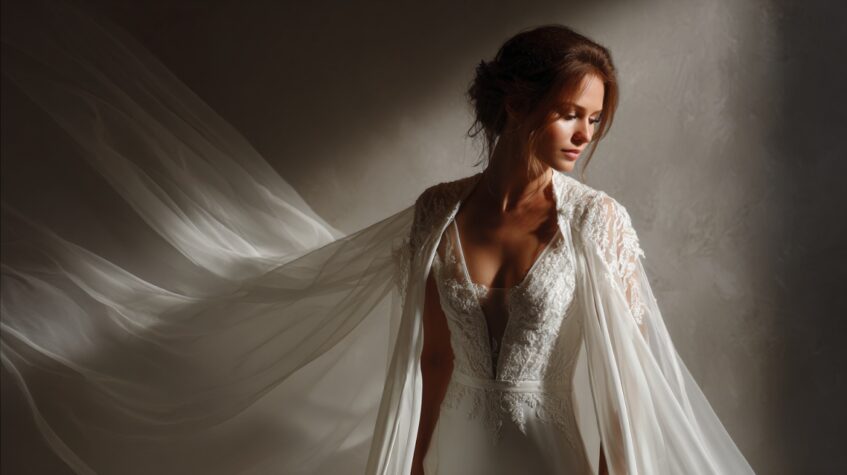
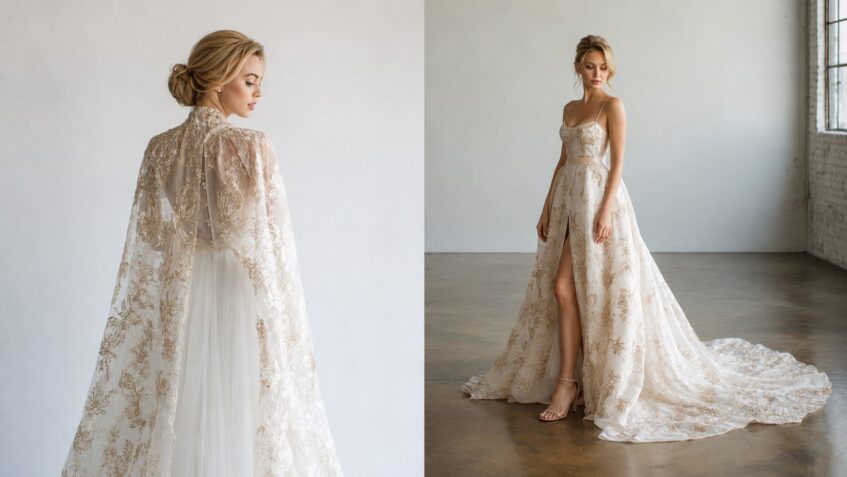
A bridal cape gives movement, coverage and ceremony drama without the weight of a traditional train. It can fall from the shoulders, attach at the back of the dress, sit like a sheer veil, or wrap around the neck like a modern capelet.
Capes work especially well with clean dresses. A simple strapless gown, square-neck crepe dress or minimalist satin silhouette can look more finished with a sheer cape, pearl-trimmed cape or lace-edged cape.
Vogue’s Fall 2026 bridal trend coverage noted “cool coats” and more layered bridal pieces on the runway. That same appetite for outer layers is part of why capes feel current. Brides are thinking beyond one dress shape and looking at the full wedding-day silhouette.
Best Bridal Cape Styles
| Cape Style | Best For | What To Watch |
|---|---|---|
| Sheer Tulle Cape | Minimal gowns, garden weddings, soft ceremony photos | Needs clean attachment points so it does not pull at the neckline. |
| Lace Cape | Classic ceremonies, church weddings, romantic dresses | The lace should match or complement the dress, not compete with it. |
| Pearl Or Beaded Cape | Evening weddings, modern gowns, simple silhouettes | Weight can pull on shoulders, so fittings are important. |
| Capelet | City weddings, modest coverage, cooler weather | Length should hit at a flattering place on the arm and waist. |
| Long Dramatic Cape | Ceremony entrance, aisle photos, formal venues | Needs space to move and someone to help arrange it before photos. |
Overskirts: The Fastest Way To Add Volume
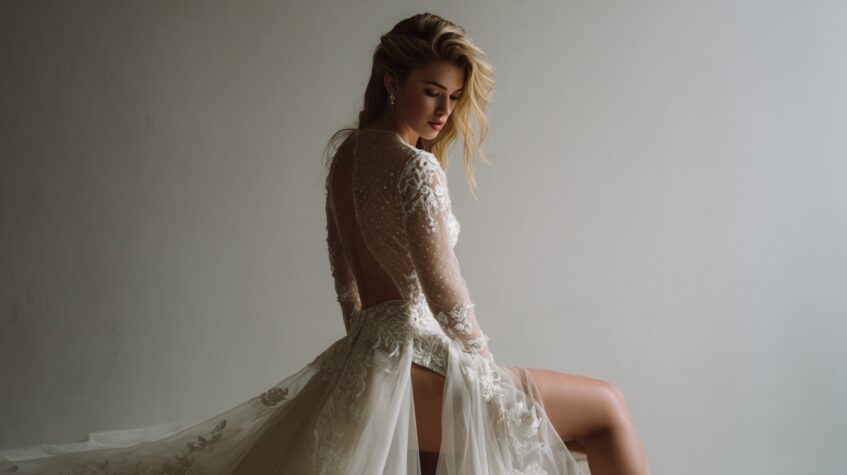
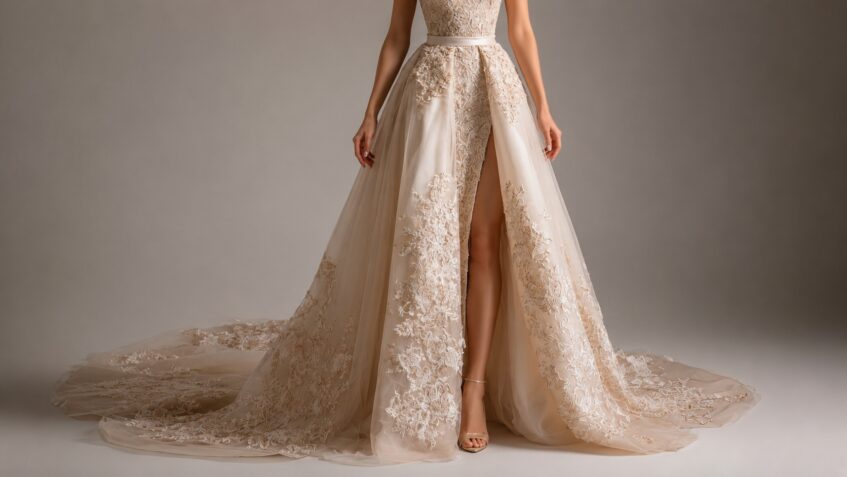
An overskirt is a removable skirt worn over the base dress. It can attach at the waist with hooks, snaps, hidden buttons, a waistband or ties. The effect can be subtle, or it can turn a slim dress into a ballgown for the ceremony.
Overskirts are useful for brides who want a fitted dress but still love the idea of a grand entrance. The overskirt gives volume for the aisle and portraits. After the ceremony, it comes off, and the fitted dress underneath becomes the reception look.
The best part is control. A bride can choose where the volume starts, how long the train falls and how visible the fastening looks. That makes overskirts easier to personalize than many full gowns.
Best Overskirt Styles
| Overskirt Style | Best For | What To Watch |
|---|---|---|
| Tulle Overskirt | Romantic volume, outdoor ceremonies, soft photos | Can wrinkle or catch on rough surfaces. |
| Satin Overskirt | Formal weddings, ballrooms, classic bridal looks | Heavier fabric needs proper waist support. |
| Organza Overskirt | Light volume, fashion-forward gowns, warm weather | Needs careful steaming before the ceremony. |
| Lace Overskirt | Traditional ceremonies, vintage styling, textured gowns | Lace pattern should line up neatly around the waist and front opening. |
| High-Low Overskirt | City weddings, short dresses, statement shoes | Works best when the shoe choice is intentional. |
Cape Or Overskirt: Which One Fits Your Wedding?
The choice depends on what you want to change. A cape changes the upper body, movement and ceremony mood. An overskirt changes the shape of the whole dress.
| Wedding Goal | Better Choice | Why |
|---|---|---|
| More drama for the ceremony | Cape or overskirt | Both work, but an overskirt changes the silhouette more. |
| Modest shoulder or arm coverage | Cape | Gives coverage without changing the skirt. |
| Ballgown look for the aisle | Overskirt | Adds volume while keeping the reception dress simpler. |
| Outdoor movement in photos | Cape | Moves well in breeze and walking shots. |
| Easy dancing later | Overskirt | Remove the volume after portraits and keep the fitted dress. |
| Cold-weather ceremony styling | Capelet or heavier cape | Adds coverage with more polish than a random wrap. |
The Fit Has To Be Planned Early

A removable piece only works when the base dress is fitted with it. Brides should bring the cape or overskirt to every important alteration appointment, especially the final fittings.
With capes, the seamstress needs to check shoulder pull, neckline weight, back attachment and arm movement. A cape that looks pretty standing still may shift when the bride hugs someone, raises flowers or turns for photos.
With overskirts, the waist is the main test. The attachment should feel secure without digging into the body. The skirt should sit at the intended waistline and stay level while walking. A heavy overskirt needs enough structure underneath so it does not drag the dress down.
We previously covered the practical side of dress movement in our guide to wedding dress bustle types. Capes and overskirts need the same level of planning. A beautiful removable piece becomes frustrating when nobody knows how it attaches, comes off or photographs from behind.
How To Time The Outfit Change
The timing should be decided before the wedding day. Do not leave it to the moment when everyone is hungry, the photographer is waiting and the coordinator is trying to move the group into cocktail hour.
- Wear the cape or overskirt for the ceremony.
- Keep it on for immediate ceremony exit photos.
- Use it for formal portraits and couple portraits.
- Remove it before dinner entrance or first dance.
- Store it somewhere clean and easy to find.
Some brides remove the piece right after the ceremony. Others keep it until the reception entrance. The right answer depends on the timeline, venue layout, weather and how many portraits need the full look.
What The Photographer Needs To Know
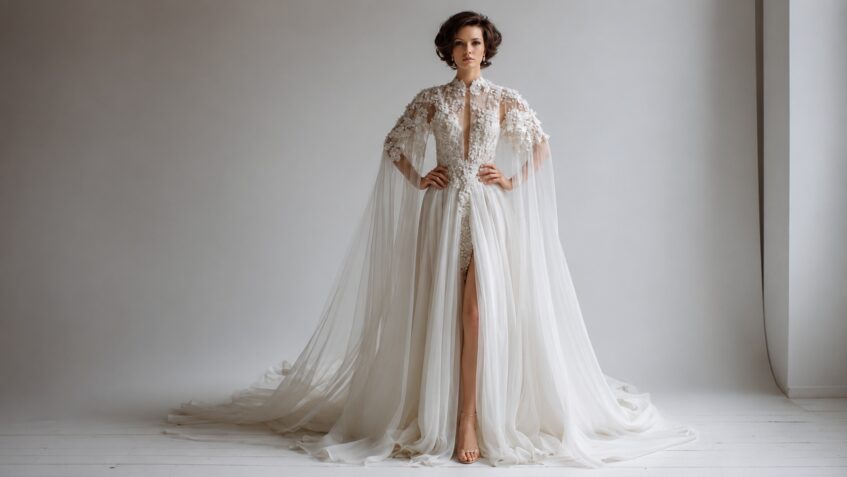
Tell the photographer before the wedding that the dress has a removable cape or overskirt. That detail changes the shot list.
The full look deserves aisle photos, wide portraits, back views, walking shots and at least one clean side angle. The second look deserves separate portraits too, otherwise the reception outfit may barely appear in the gallery.
A cape needs movement. An overskirt needs shape. The photographer should know when each piece will be worn and removed, so the images do not miss the reason you paid for the transformation.
Venue And Weather Make A Big Difference
Capes and overskirts behave differently indoors and outdoors. A long cape can look beautiful on stone steps, in a church aisle or on a clean hotel staircase. It can become annoying in wet grass, sand, mud, gravel or heavy wind.
An overskirt can be easier outdoors if the hem is controlled, but a long train still needs help. Tulle catches leaves. Satin shows water marks. Organza wrinkles. Lace can snag on rough wood or garden paths.
Before buying, picture the actual venue floor: aisle runner, grass, beach, cobblestone, carpet, terrace, church tile, ballroom floor or forest path. The dress has to work there, not only inside the boutique.
Cost: When Transformable Pieces Save Money And When They Do Not
A cape or overskirt can cost less than buying a second dress, but it is still a major bridal purchase. Price depends on fabric, length, beadwork, lace, custom work and alteration time.
| Piece | Lower-Cost Version | Higher-Cost Version | Budget Note |
|---|---|---|---|
| Short Capelet | Simple tulle, satin or crepe | Beaded, lace, pearl or custom-structured | Usually the most affordable removable option. |
| Long Cape | Plain tulle or chiffon | Cathedral length with lace or beadwork | Length and embellishment increase cost quickly. |
| Tulle Overskirt | Simple gathered tulle | Layered tulle with train and custom waistband | Volume affects price as much as fabric. |
| Satin Overskirt | Clean A-line satin | Structured ballgown overskirt with long train | Heavier construction often means higher alteration cost. |
| Lace Overskirt | Lace overlay with simple closure | Custom lace placement and scalloped hem | Pattern matching adds labor. |
The smartest budget question is not only “How much is the piece?” Ask how much the alterations will cost, whether the piece needs steaming, who will remove it, and how it will be stored after portraits.
Common Mistakes Brides Should Avoid
- Buying a cape or overskirt without trying it on with the actual dress.
- Choosing a fabric that clashes with the dress fabric.
- Ignoring the attachment method until the final fitting.
- Forgetting to practice removing the piece.
- Choosing too much volume for a small venue or narrow aisle.
- Using a heavy cape on a delicate neckline.
- Letting the removable piece hide the best part of the dress.
- Skipping separate photos of the second look.
The best transformable looks feel intentional. The weakest ones look like the bride added something late because the dress felt unfinished.
Who Should Choose A Cape?
A cape works well for a bride who wants ceremony impact without changing the dress shape. It is also useful for shoulder coverage, church ceremonies, cooler weather, modern minimalist gowns and photos with movement.
Capes suit brides who like a fashion detail but do not want a standard veil. They also help when the back of the dress is simple and needs more presence for the aisle.
Who Should Choose An Overskirt?
An overskirt works best for a bride who wants a fitted reception dress and a fuller ceremony look. It is especially useful with mermaid gowns, column dresses, minis and simple strapless bases.
Overskirts suit brides who want the drama of a ballgown but not the weight for the whole night. They also work well when the ceremony is formal and the reception is more relaxed.
How To Shop For A Transformable Dress
Start with the base dress. If the dress does not look good without the removable piece, the transformation will not save it. The second look should be strong enough to stand alone.
- Is the cape or overskirt made by the same designer as the dress?
- Does the fabric match under daylight and indoor lighting?
- Where does it attach?
- Can the bride sit, walk and dance after removal?
- How heavy is the removable piece?
- Will the seamstress need to add hooks, snaps or loops?
- Who will remove it on the wedding day?
- How should it be steamed and stored?
A salon sample may look perfect on the hanger, but the wedding-day version has to survive movement, photos and help from people who may be touching it for the first time.
FAQs
Bottom Line
Bridal capes and overskirts work because they give brides more than one look without requiring a full outfit change. A cape changes the mood from the shoulders back. An overskirt changes the full silhouette and adds ceremony volume.
The best choice depends on the dress, venue, timeline and comfort level. Try the removable piece with the actual gown, plan the removal moment, include the photographer, and treat the second look as part of the design from the beginning.