
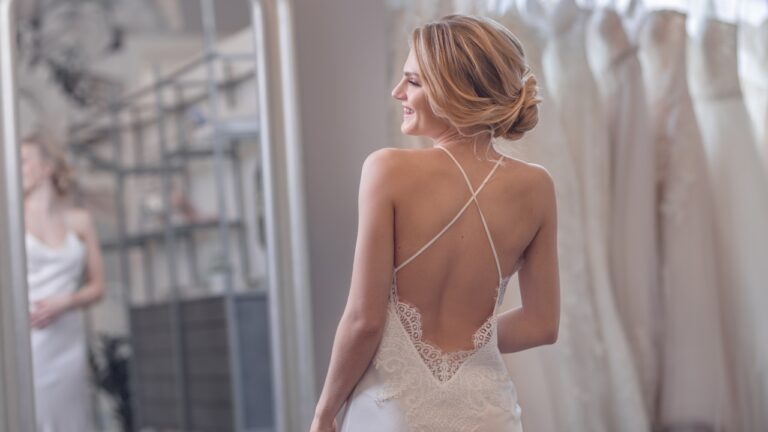
Minimalist bridal fashion focuses on clean lines, quality fabrics, timeless silhouettes, structural beauty, and expert tailoring instead of heavy decoration.
Cost also makes fit and fabric choices matter.
A recent Real Weddings Study placed the average wedding dress cost at about $2,100, with most gowns falling into off-the-rack or made-to-order categories rather than custom design.
Dense beading, lace overlays, and ornate surface details are pared back so the bride’s natural beauty can lead.
But, how can a bride build a minimalist look that feels polished, personal, and anything but boring?
Let us talk about it.
1. Sleek Satin Sheath
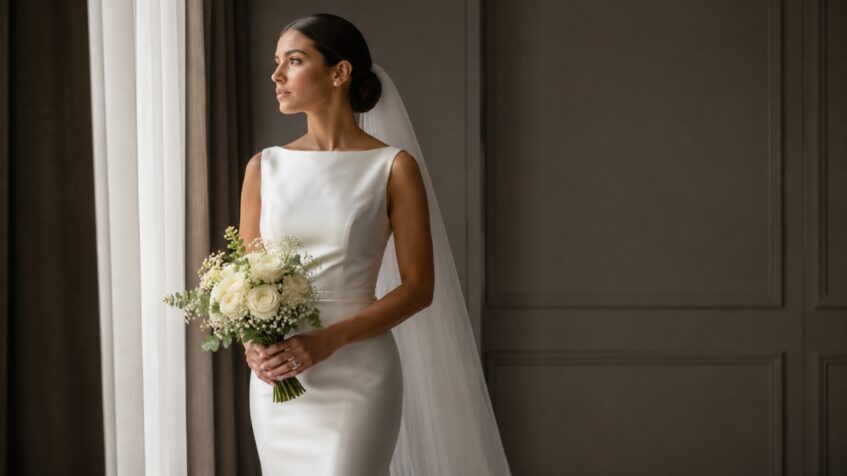
A smooth satin sheath or column gown creates a clean bridal look with minimal seams and a close fit along the body’s natural line.
City weddings, intimate ceremonies, courthouse weddings, and modern hotel venues suit this style well.
Petite brides can benefit because sheath dresses follow the body without adding bulk. Column gowns also create a longer visual line, which photographs well and feels sophisticated.
Satin, silk satin, and charmeuse are key fabric choices because they add movement and a soft sheen without heavy detail.
Straight, scoop, cowl, and delicate V-necklines keep the gown minimal while still shaping the face and shoulders.
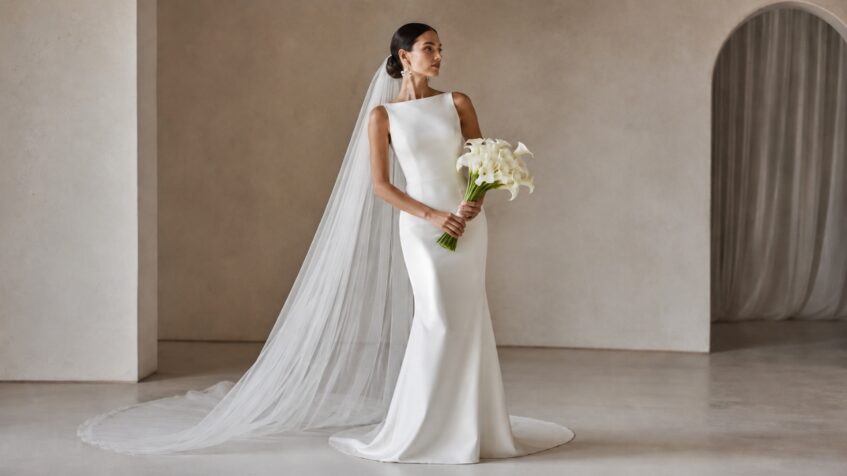
Satin catches light beautifully in photos, giving a simple silhouette depth and dimension. Fit needs extra attention because a minimalist gown has little to disguise pulling, puckering, or poor seam placement. Darts, seams, fabric tension, and hem length should all be checked carefully during fittings. A fitted crepe column gown with architectural seams and a precise hem creates a polished bridal look without dramatic embellishment. Matte crepe and stretch crepe offer structure, smooth drape, and quiet elegance. Undergarments need early planning with this style because crepe and satin can reveal texture beneath the dress. Bring chosen shapewear to fittings so the final fit can be checked accurately. A sculptural cuff or clean drop earrings can add interest without making the look busy. Barely there sandals keep the styling light. A short veil softens the look, while no veil gives it a sharper editorial finish. A strapless A-line gown in Mikado, satin, or structured crepe gives minimalist bridal style a classic formal mood. A clean bodice, defined waist, and gentle skirt volume create balance without excess. Formal ceremonies, garden weddings, churches, estates, and traditional venues suit this silhouette. A-line gowns flatter many body types because the fitted bodice shapes the waist while the skirt opens softly. Straight-across strapless necklines feel modern. Soft scoop necklines feel romantic. Subtle sweetheart necklines add a gentle curve while keeping the gown simple. A plain veil without lace trim is the strongest match. Pearl studs, a delicate tennis bracelet, and classic pumps are enough. Bodice construction matters because strapless gowns should stay secure without constant adjustment. A strapless neckline naturally becomes the main visual point. Accessories should stay quiet so the clean shape can lead. Evening receptions, modern ballrooms, and fashion-forward ceremonies suit this look well. Minimalist mermaid gowns skip lace overlays and heavy beading. Structured fabrics hug curves and flare near the knee, creating impact through proportion and movement. Off-the-shoulder, square, and plunging V-necklines work especially well. A dramatic neckline usually needs no necklace. Sleek drop earrings, a long plain veil, and clean heels give the gown enough polish. Mermaid silhouettes create visual power through cut, internal structure, and fabric quality. Stretch satin and stretch crepe make fitted gowns easier to move in during walking, posing, and dancing. A sweeping stretch-crepe mermaid gown without embellishment can still feel formal because the strength comes through silhouette and tailoring. A white bridal suit, blazer dress, or tailored two-piece set offers a strong minimalist option outside the traditional gown category. Courthouse weddings, civil ceremonies, rehearsal dinners, welcome parties, reception changes, and after-party looks all suit this direction. Crepe, silk, satin-backed crepe, and wool-blend suiting support clean tailoring. Sharp shoulders, a nipped waist, wide-leg trousers, a peplum jacket, or a mini blazer dress can feel bridal when the cut is precise. Modern brides often need several wedding outfits for engagement parties, showers, rehearsal dinners, welcome parties, farewell brunches, and reception changes. Bridal fashion is also moving toward planned wedding wardrobes, not just one ceremony outfit, making tailored suits, blazer dresses, and minimalist separates especially useful. Minimalist pieces can work across multiple events because they rely on tailoring, fabric, and proportion instead of trend-heavy decoration. A perfectly tailored white bridal suit, minimalist midi, or crepe sheath can also be altered, dyed, or worn again later. Rewear potential also connects with a broader shift toward thrifted and sustainably sourced wedding looks. Clean bridal pieces often have a longer life because they are not tied to dense embellishment. A bias-cut silk or satin slip dress creates a soft, romantic, and effortless bridal look. Destination weddings, beach weddings, intimate dinners, warm-weather ceremonies, and after-party bridal outfits suit this style especially well. City hall and civil ceremony styling has also widened bridal options, with slip dresses, mini sets, and tailored suits now treated as polished wedding looks. Focus sits on fluidity, drape, and ease rather than heavy construction. Silk satin, charmeuse, flowing crepe, and lightweight natural fabrics support the movement needed for a slip dress. Cowl, scoop, and V-necklines suit the delicate shape. Tiny pearl earrings, strappy sandals, and a sheer scarf or plain veil add softness without overpowering the gown. Spaghetti straps give elegant shoulder definition and comfort during long celebrations. Silk, satin, and charmeuse are especially strong for bias-cut slips because they create liquid drape and catch light with a luxurious finish. Simple slip dresses can also keep brides cooler for summer weddings, while unembellished fabrics often move more naturally than heavily beaded gowns. Personality can come through one intentional focal point rather than several competing details. A dramatic veil, sculptural earrings, cape, gloves, bow, or bold shoes can give a clean dress more presence without making it feel busy. Creative floral styling can work the same way. Sculptural stems or paper flowers can feel more intentional when paired with a restrained gown. Column, A-line, sheath, mermaid, and strapless gowns all work as a clean base. Accessory choice should follow the dress’s strongest feature instead of competing with it. One focal piece is usually enough. Dramatic veils work especially well with clean gowns because the dress does not fight with the veil’s texture, pearls, embroidery, or shape. Statement jewelry should follow the same rule, since one strong piece prevents visual clutter. Minimalist bridal fashion is not about doing less just to look restrained. Strong minimalist looks are built through proportion, fabric, fit, structure, movement, and careful styling. Minimalist bridal style works because it frames the bride instead of hiding her under excessive fabric, beading, or decoration. Clean design allows posture, movement, face, hair, bouquet, and personal styling choices to shape the final look.
2. Tailored Crepe Column Gown
3. Strapless Architectural A-Line
4. Minimalist Mermaid
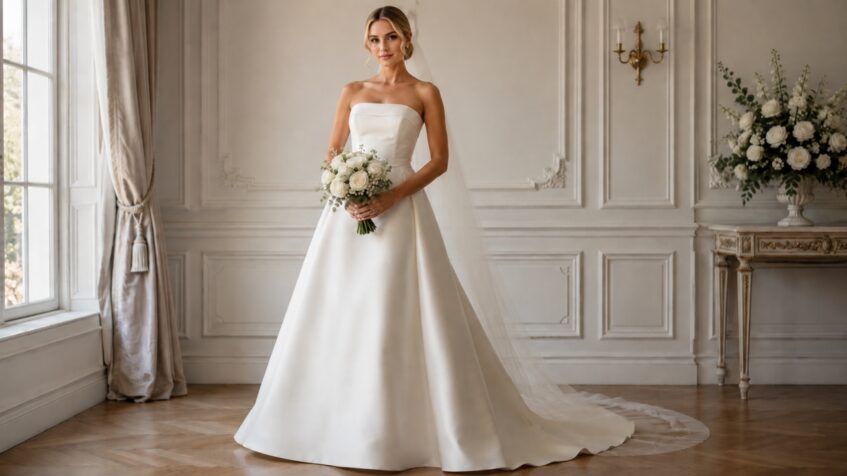
A fitted mermaid or trumpet gown in plain crepe, stretch satin, or smooth Mikado creates drama through shape rather than sparkle.
5. Clean Bridal Suit or Tailored Set
6. Slip Dress Bride
7. Minimal Gown with One Statement Accessory
Closing Thoughts