
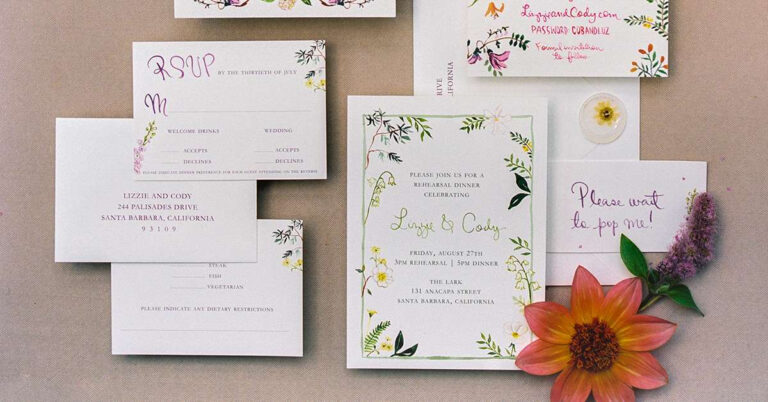
The RSVP card is a crucial part of any invitation suite. It’s the piece that guests interact with the most. Understanding how to phrase this card can make a significant difference in gathering timely responses. The term RSVP stands for the French phrase “répondez s’il vous plaît,” meaning “please reply.” When crafted well, the wording ensures that responses come in promptly, avoiding last-minute stress for the couple.
This guide offers over 40 examples tailored for various styles. From formal events to casual backyard gatherings, there’s something for everyone. The smallest card in the suite carries a lot of weight. It impacts seating arrangements, meal choices, and overall planning.
Readers will learn how to select the right tone and phrasing. Whether it’s a classic approach or a relaxed invitation, this resource simplifies the process. By the end, couples will know exactly what to ask and how to ask it, making their planning journey smoother.

Understanding Wedding RSVP Wording and Its Importance
In contemporary invitations, the response card holds significant importance. It serves as the primary means for guests to communicate their attendance. This simple card can greatly impact the planning process for the hosts.
Understanding the user intent behind RSVP wording begins with recognizing that guests want clarity and simplicity. They seek a friction-free way to express their attendance plans without any ambiguity or social discomfort. When guests open a response card, they are looking for immediate answers to three key questions:
- What is being asked of them?
- How should they respond?
- By when do they need to provide their answer?
The psychological comfort of a well-worded RSVP card cannot be overstated. Guests feel respected when the language matches the formality of the event and provides clear options for both accepting and declining. Clear wording matters because it helps prevent the most common planning nightmare: chasing down half the guest list just before the event.
Ambiguous or missing decline options create a significant problem. Guests who cannot attend but see no graceful way to say no often default to silence. This silence can distort the accuracy of the headcount during the critical final weeks before the event.
Every line on a response card represents a data point that feeds into larger planning systems. This includes seating charts and dietary accommodations. Thus, precision in language becomes a practical necessity rather than a stylistic choice.
The tone of the RSVP wording also sets expectations for the event itself. It signals to guests whether they should anticipate a formal black-tie affair or a relaxed backyard celebration long before they arrive. Couples who invest time in crafting thoughtful response card language typically see higher response rates and more accurate information from their guests.
Moreover, the RSVP card serves as a direct communication channel between hosts and guests. When the wording is clear, it strengthens the relationship by demonstrating consideration for the guest’s experience. Modern couples are increasingly blending traditional etiquette with contemporary convenience. Understanding the intent behind each wording choice allows for intentional decisions that honor both heritage and practicality.
Essential Components of an RSVP Card
A well-structured response card contains key components that streamline the invitation process. Understanding these elements helps ensure that guests have all the necessary information to respond promptly.
Name Line
The name line is critical for any RSVP card. It allows guests to write their names, ensuring accurate records for seating arrangements and catering. Traditional designs often use the format “M_______________,” prompting guests to include their titles. However, modern cards may simply state “Name(s): _______________,” making it more straightforward.
Response Options (Accept/Decline)
Clear response options are essential. Every card should include both an accept and a decline choice. Omitting the decline option can lead to confusion, pushing guests who cannot attend to remain silent. This silence can distort the headcount needed for planning.
RSVP Deadline
The RSVP deadline should be prominently displayed. It is advisable to set this deadline three to four weeks before the event. This timeframe allows couples to follow up with guests who have not responded while still meeting catering requirements.
Meal Choices and Dietary Requirements
Meal choices are often necessary, especially when the venue requires a headcount by entrée. Clear labeling of meal options helps avoid confusion. Additionally, including a line for dietary requirements ensures that guests with allergies or restrictions are accommodated.
Additional Elements (Song Requests, Plus-Ones)
Including a song request line has become popular. This allows guests to engage personally while providing couples with music ideas. Plus-one notation should also be clear, stating something like “We have reserved ___ seats in your honor” to avoid ambiguity.
| Component | Description |
|---|---|
| Name Line | Space for guests to write their names, ensuring accurate records. |
| Response Options | Clear accept and decline choices to avoid confusion. |
| RSVP Deadline | Deadline set 3-4 weeks before the event for timely responses. |
| Meal Choices | Clearly labeled options to help with catering headcounts. |
| Dietary Requirements | Line for guests to note any allergies or restrictions. |
| Song Requests | Optional line for guests to suggest songs. |
| Plus-One Notation | Clear indication of how many guests are invited. |
Formal RSVP Wording Examples for Black Tie and Traditional Weddings
Crafting the perfect RSVP card for a formal event requires a keen understanding of etiquette. The language used must reflect the sophistication of the occasion. Formal RSVP wording employs a classic third-person structure, avoiding contractions to maintain a dignified tone.
Here are some sample phrases that embody this elevated style:
- M_______________ / The favor of a reply is requested by the fifteenth of September. / __ Accepts with pleasure __ Declines with regret / Number attending: ___
- Kindly reply by September 15 / __ Graciously accepts / __ Respectfully declines
- We request the pleasure of your reply by October 1st. / Name(s): _______________ / __ Will attend with delight / __ Regrets, unable to attend
- M_______________ / __ Joyfully accepts the kind invitation / __ Regretfully declines / Kindly reply by the first of November.
For formal cards, design plays a vital role. Keep the font clean and the spacing generous. A single elegant typeface can convey more than elaborate decorations. If the main invitation uses “honour,” the RSVP card should reflect this by using “favour.”
Additional design tips include:
- Use a full written date, such as “the fifteenth of September,” to enhance the ceremonial feel.
- Clearly present the number of guests attending as “Number attending: ___” to maintain clarity.
- Consider using traditional wording and classic typography for a cohesive look throughout the invitation suite.
Semi-Formal RSVP Wording Examples
Semi-formal RSVP cards offer a unique blend of warmth and sophistication. This style is the most common choice for modern celebrations. It strikes a balance that feels approachable yet polished, making it suitable for various venues, from church ceremonies to hotel ballrooms.
Polished Yet Warm Language
The language used in semi-formal invitations is inviting and friendly. Phrases like “Happily accepts” and “Regretfully declines” exemplify this tone. They convey genuine enthusiasm without crossing into overly casual territory.
Example Phrases for Semi-Formal Settings
Here are some effective phrases that couples can use:
- Please respond by September 20 / Name(s): _______________ / __ Happily accepts / __ Regretfully declines / Number attending: ___
- We hope you can join us! Please reply by October 5. / __ Yes, we’ll be there! / __ Sorry, we’re unable to attend. / Number of guests: ___
- Kindly reply by August 30 / Name(s): _______________ / __ Delighted to attend / __ Regretfully unable to attend
- Please let us know by September 10 / __ We can’t wait to celebrate with you! / __ We’ll be celebrating from afar.
This semi-formal wording works across a wide range of venues and styles. It helps create a cohesive invitation suite, signaling to guests the kind of celebration they can expect. The phrase “Number of guests: ___” provides clarity about plus-one expectations without sounding too rigid.
Additionally, semi-formal cards can incorporate a touch of personality. For instance, the decline option “We’ll be celebrating from afar” allows guests to express their regrets graciously while still showing support for the couple’s special day.
Casual and Humorous RSVP Wording Examples
When planning a casual gathering, the RSVP card can reflect the fun and relaxed vibe of the event. Casual invitations should feel like a friendly message from a best friend. They set the tone for a laid-back celebration, inviting guests to respond in a way that feels comfortable.
Casual Invitations: Relaxed & Friendly Wording
For backyard receptions and garden parties, relaxed wording works best. Examples like “RSVP by July 1 — we can’t wait! / Name(s): _______________ / __ Count us in! / __ Sorry, we’ll miss it.” perfectly capture this friendly tone. Another great option is, “Are you coming to the party? / __ Yes! See you there. / __ No, but I’ll be cheering you on. / Please let us know by June 15.”
This informal style creates a welcoming atmosphere. Phrases such as “Count us in!” or “Sorry, we’ll miss it” help guests feel invited rather than formally summoned. This approach encourages a relaxed response, aligning with the event’s spirit.
Humorous Invitations: Adding Personality and Fun
Humorous RSVP wording allows couples to inject their personality into their stationery. For example, “Will you be partying with us, or partying in your pajamas at home? / __ Wouldn’t miss it for anything / __ Will be there in spirit (and definitely in tears) / Let us know by September 10.” This kind of humor brings smiles the moment guests open the envelope.
Another fun example is, “The champagne is chilling. Will you be there to drink it? / __ Yes, pop the bottles! / __ No, save my glass for someone else. / RSVP by July 20.” Such playful lines set the stage for a fun and unpretentious celebration.
It’s essential to maintain clarity even in humor. For instance, “We’re getting hitched. You should probably come. / __ Abso-freaking-lutely! / __ Can’t, but I’ll cry happy tears at home. / Please reply by August 15.” This keeps the RSVP process light while ensuring guests know how to respond.
Casual and humorous cards should still include all essential information, like the reply deadline and name line. However, the framing around those elements can be creative and unexpected. Adding a song request line feels natural in this context, inviting guests to contribute to the playlist without the formality of traditional requests.
Destination Wedding RSVP Wording
The wording for destination wedding response cards must blend excitement with practicality. These cards serve a dual purpose, capturing the thrill of the location while providing essential travel details and response expectations. It’s crucial to keep the tone warm and inviting, making it easy for guests to reply.
Conveying Location Excitement
Including the specific destination by name can instantly transport guests and build anticipation. For example, a phrase like “We’re heading to Tuscany — will you join us?” not only informs but also excites. The acceptance option “Bags are packed! See you there” reinforces the joy of the journey ahead.
Moreover, it’s important to make the decline option feel as gracious as the acceptance. Phrases such as “Sadly can’t make the trip. Sending so much love” honor the guest’s situation while maintaining a positive connection.
Clear Travel and Response Instructions
Destination RSVP cards should include clear travel instructions and a deadline for responses. This deadline is typically set eight to ten weeks before the event, allowing guests ample time to make travel arrangements. A good example would be, “Please let us know by May 1.”
It’s also helpful to acknowledge that some guests may not be able to attend. The phrase “We’ll be following along from home. Congratulations in advance!” shows that their presence is missed but appreciated nonetheless.
Additionally, the format of the RSVP card can enhance the travel theme. Postcard-style designs are popular for destination weddings, evoking a sense of adventure while being cost-effective for postage. For those looking for unique designs, Paperlust offers destination-specific RSVP card options that align with the spirit of the location.

Including Meal Choices and Dietary Requirements in RSVP Wording
Collecting meal options on the RSVP card streamlines the catering process for any celebration. When planning a reception with a plated dinner, hosts need to gather meal preferences in advance. This helps the caterer prepare the right amount of each dish.
It’s best to keep meal options concise. Using three words or fewer per dish ensures clarity. Labeling choices by the actual protein or dish name is crucial. For example, using “Beef,” “Chicken,” or “Vegetarian” is far more effective than vague terms like “Option 1.” Here are a couple of examples:
- Please reply by September 15. / Name(s): _______________ / __ Accepts __ Declines / Entree preference (please circle one per guest): __ Beef __ Chicken __ Vegetarian.
- Kindly reply by October 1. / __ Will attend __ Unable to attend / Meal selection (please indicate one per person): Guest 1: __ Prime Rib __ Salmon __ Vegetarian / Guest 2: __ Prime Rib __ Salmon __ Vegetarian.
For dietary requirements, a simple open-text field is usually sufficient. A line labeled “Dietary requirements or allergies: _______________” works well. Alternatively, you can ask, “Any dietary restrictions? (vegetarian, vegan, gluten-free, nut allergy, etc.) _______________.” This allows guests to communicate their needs without feeling overwhelmed.
Collecting meal preferences on the RSVP card removes a significant coordination burden later in the planning process. This eliminates the need for separate communications with dozens of guests about their dinner selections. Small icons indicating meal choices have become a popular design option, making the selection process more intuitive.
When collecting meal preferences for multiple guests on a single RSVP card, clearly designate separate lines for “Guest 1” and “Guest 2.” This prevents confusion about which person has selected which entree. Additionally, placing the dietary requirements field after the meal choice section makes it feel like a natural extension of the dinner selection process.
Caterers consistently report that clear, specific meal choice labeling on RSVP cards dramatically reduces errors in meal preparation and service on the day of the event. This small wording detail is disproportionately important to the overall guest experience.
Online RSVP Wording on Physical and Digital Invitations
The shift towards online responses is transforming how invitations are managed. Many couples now opt for a wedding website to handle RSVPs. This approach centralizes responses, making it easier for hosts to track attendance.
Including a website URL or QR code on physical cards is a practical solution. This not only saves postage but also provides guests with a straightforward way to respond. The challenge lies in keeping the wording concise yet clear.
Examples of effective wording include:
- Please RSVP at our wedding website: [yourweddingsite.com] / Kindly reply by September 15.
- We’ve made it easy! Please reply online by August 30. / [yourweddingsite.com]
- Kindly respond using the website below by October 5. / [yourweddingsite.com]
- Scan the QR code below or visit [yourweddingsite.com] to RSVP by September 1.
When including a QR code, ensure it is printed at least one inch square. This size allows for reliable scanning. Testing the code on multiple devices before printing is also essential.
Clear instructions for online responses should accompany the URL or QR code. This provides a backup for guests who may prefer typing the address manually. Phrases like “Please RSVP at our wedding website” followed by the URL and RSVP deadline offer clarity.
For digital RSVP forms, using dropdown or radio button selectors for meal choices ensures consistent data collection. This method is far more effective than open text fields, which can lead to confusion.
Field labels should be brief and include first and last name, attendance confirmation, number of guests, meal choice, dietary restrictions, and an optional song request line. Some couples may consider accepting both mail-back and online RSVPs, but this often complicates tracking responses.
Using a built-in digital RSVP option through invitation platforms is the most efficient method. Guests can respond directly from the invitation, and responses are captured immediately in a centralized dashboard.

Practical Tips for RSVP Deadlines and Return Address Details
Establishing clear RSVP deadlines is vital for smooth event planning. Couples should set the RSVP deadline three to four weeks before the big day. This timeframe allows enough time to follow up with guests who have not responded and still meet the caterer’s final headcount. An earlier deadline also provides more time to prepare day-of stationery items.
Once the RSVP deadline has passed, couples should wait five to seven days before reaching out to non-responders. A quick, personal message like, “Hey, we just wanted to make sure your RSVP card didn’t get lost in the mail — can you let me know if you’re coming?” works perfectly. This approach avoids the impersonal feel of mass group messages.
For mail-back cards, pre-printing the return address on the reply envelope is essential. This step eliminates a significant barrier, ensuring guests do not have to search for the correct address. Including a pre-affixed stamp on the reply envelope is also considered proper etiquette. This small detail can dramatically improve response rates, as an unstamped envelope is a common reason for delays in returning the card.
Before stamping reply envelopes in bulk, couples should take a complete sample invitation suite to the post office. This helps check the weight, as cards with multiple inserts may require additional postage. The RSVP deadline should be the most prominent piece of information on the card after the response lines themselves.
- Setting an effective RSVP deadline requires working backward from the wedding date, typically three to four weeks prior.
- An earlier RSVP date allows more time to plan day-of stationery items like place cards and seating charts.
- The deadline should be clearly visible, as guests often overlook unclear dates.
- Follow up with guests who haven’t responded five to seven days after the deadline using personal outreach.
- A gentle follow-up message can strike the right balance between concern and courtesy.
- Pre-printing the return address on the reply envelope simplifies the process for guests.
- Including a pre-affixed stamp improves response rates significantly.
- Check the weight of the invitation suite before stamping to ensure proper postage.
- The phrase “Kindly reply by” followed by the specific date provides a clear deadline.
- Adding a nudge like “Please let us know by August 20 — our caterer is counting on you!” creates a sense of shared responsibility.
Wedding RSVP Wording: How to Choose the Best Style for Your Wedding
Selecting the right style for RSVP cards is essential for a seamless invitation experience. Three core factors shape the wording: the formality of the event, the information needed from guests, and the method of response.
First, match the formality of the RSVP card to the overall tone of the invitation suite. If the main invitation uses phrases like “requests the honour of your presence,” the RSVP should reflect this with “kindly respond” and the traditional “M_____” line. This consistency enhances the aesthetic and conveys the event’s seriousness.
Next, evaluate what information is truly necessary. Each line on the RSVP card is a data point that must be processed. Overloading the card with extra questions can lower response rates and clutter the design. For instance, if meal choices or song requests can be gathered on a wedding website, consider doing so to keep the RSVP card clean and focused.
Lastly, decide on a single return method. Accepting both mail-back and online RSVPs can complicate tracking responses. Couples often find that sticking to one method simplifies the process. If using mail-back, including pre-stamped self-addressed envelopes can significantly boost response rates by 15-20%.
For casual events, warm decline options like “Can’t make it, but wishing you the best” feel friendly and approachable. Meanwhile, the traditional “M_____” line remains the gold standard for formal events, ensuring guests provide their titles for accurate place card creation.
Couples can explore various designs that align with their wedding style. For example, Paperlust offers RSVP card designs grouped by formality level, allowing for customization that reflects their unique voice and needs.
Ultimately, the tone of both the accept and decline options should be carefully considered. Phrases like “Can’t make it, but wishing you the best” convey warmth for casual gatherings, while “Declines with regret” maintains the dignity appropriate for formal celebrations.
Conclusion
The response card may appear small, but its impact on planning is significant. By including essential details and a personal touch, couples can make the RSVP process enjoyable. Common mistakes include omitting the reply-by date or making it hard to find. Leaving out the name field can lead to confusion when guests return blank envelopes.
Additionally, vague meal options like “Option 1” can complicate catering arrangements. It’s also crucial to include a decline option to avoid non-responses from guests unable to attend. Couples who take the time to craft thoughtful RSVP cards often see higher response rates and better communication.
For those needing assistance, professional stationers like Paperlust offer tailored RSVP cards with free envelopes and quick proofs. This ensures that every detail matches the couple’s style, making the planning process smoother and more enjoyable.
FAQ
What is the purpose of an RSVP card?
An RSVP card helps hosts determine the number of guests attending the event, allowing for better planning and catering arrangements.
How should guests respond to an RSVP?
Guests should indicate their attendance by checking the appropriate box on the card, and if applicable, providing meal preferences or dietary restrictions.
What information should be included on an RSVP card?
An RSVP card should include the names of the guests, response options (accept or decline), a deadline for responses, and any meal choices or dietary requirements.
How can one word an RSVP for a casual event?
Casual wording can be friendly and relaxed, such as “We hope you can join us! Please let us know if you can make it.”
Is it necessary to include a deadline for RSVPs?
Yes, including a deadline is essential for ensuring timely responses, which helps with finalizing guest counts and catering needs.
How can dietary restrictions be addressed in RSVP wording?
The wording can include a line such as “Please let us know if you have any dietary restrictions or allergies,” allowing guests to communicate their needs.
What is the best way to encourage guests to RSVP promptly?
Including a stamped return envelope or clear online response instructions can encourage guests to reply quickly.
How can one include meal choices on an RSVP card?
The card can list meal options with checkboxes, allowing guests to select their preferred dish when responding.
What are some examples of humorous RSVP wording?
Humorous wording might include phrases like “Come for the vows, stay for the cake! Let us know if you can make it!”
How can online RSVPs be integrated into physical invitations?
Hosts can include a URL or QR code on the invitation that directs guests to an online RSVP form for convenience.