
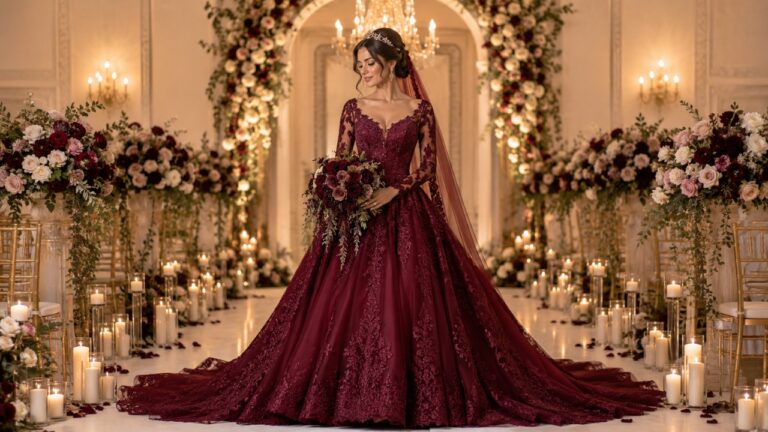
Non-white wedding dresses give modern brides more freedom to choose a look that feels personal, elegant, and bridal.
Color can express style, comfort, symbolism, and mood in a way that white or ivory may not.
Queen Victoria’s 1840 wedding helped popularize white bridal gowns.
Before then, many brides wore their best dress instead of buying a gown made only for a wedding.
Soft shades, metallic accents, and careful styling can make a non-white gown feel romantic, polished, and wedding-ready.
Let us talk about those in greater detail.
Why Brides Are Choosing Non-White Dresses
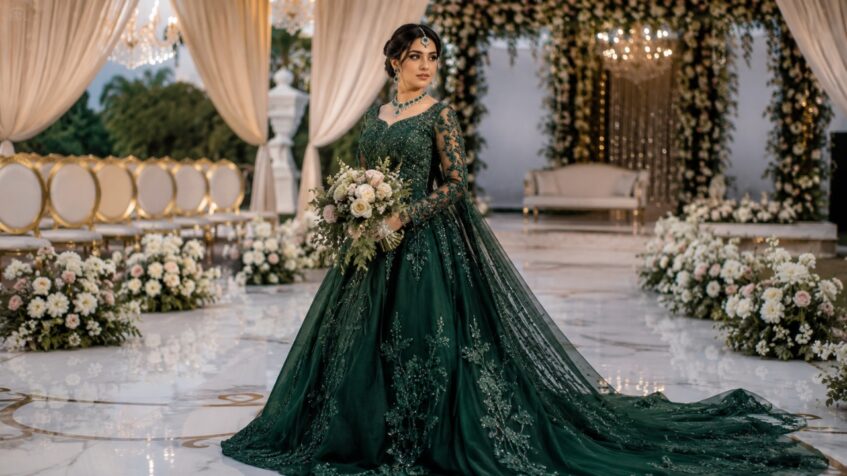
White is no longer the only bridal option that feels classic. Many brides choose color because it feels closer to their personal style, everyday taste, and wedding vision.
A non-white gown can still look romantic, formal, and bridal while giving the bride more room to express herself.
Color can also help a gown feel more connected to the full celebration. A bride may choose a shade because it matches a favorite color, a sentimental detail, a wedding theme, a season, or a planned palette.
Blush can suit a spring garden wedding. Burgundy, emerald, and dark purple can suit fall. Gold, silver, and champagne can suit evening or ballroom settings.
Colored Bridal Fashion Is Becoming More Common
One custom bridal designer’s yearly work shows how common colored bridal fashion has become:
Fewer than 10% of her custom gowns in a given year were primarily white or ivory.
Color can connect to a favorite shade, sentimental detail, wedding theme, season, or full color palette. Blush can suit a spring garden wedding.
Symbolism Matters
View this post on Instagram
Some brides avoid white because they do not connect with its historical purity or religious symbolism. For those brides, color can feel more honest and personal.
A gown in champagne, blush, blue, green, red, black, or gold can carry a meaning that feels closer to the bride’s life and values.
Color can also create a softer emotional connection to the dress. Pale blue might feel calm and romantic. Sage green might feel natural and grounded.
Burgundy might feel dramatic and confident. Champagne might feel elegant without looking too traditional.
Style Can Still Feel Bridal
Non-white does not mean less formal.
Bridal feeling often comes through fabric, shape, detail, and styling, not only color.
Lace, tulle, chiffon, organza, corsetry, pearl accents, trains, veils, capes, and floral embroidery can make a colored gown feel wedding-ready.
A bride can choose a subtle shade for a soft look or a stronger color for a statement.
Both choices can feel intentional when the gown matches the venue, season, and mood of the day.
Soft Shades for a Romantic Bridal Look
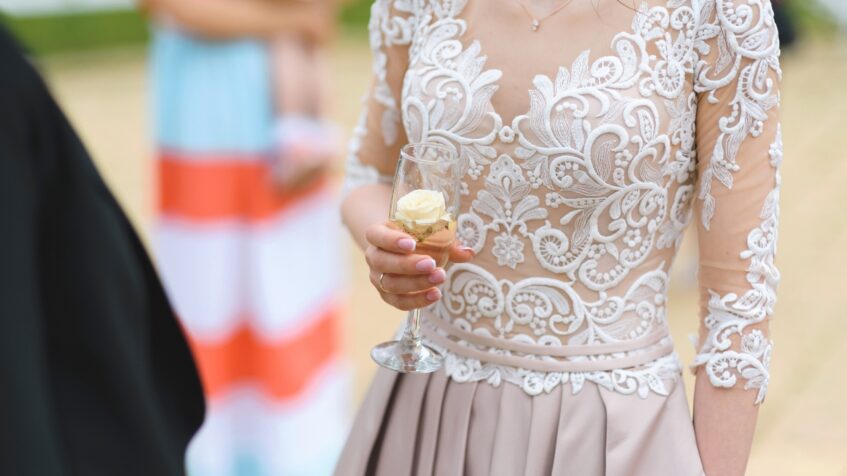
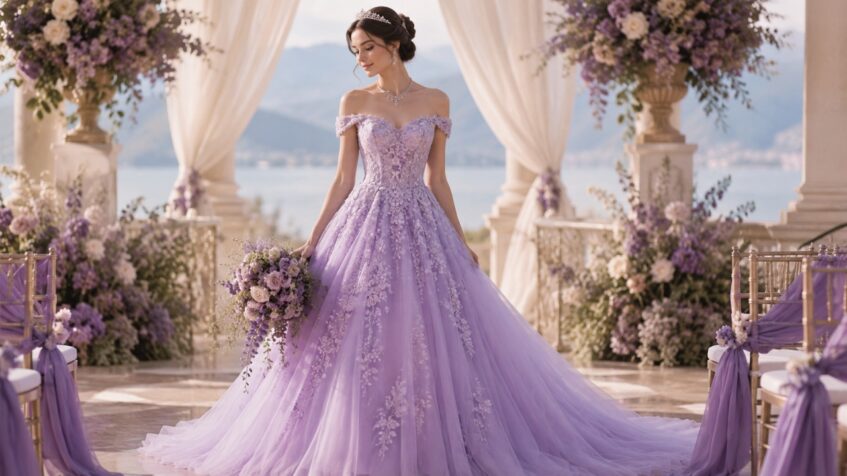
Blush, champagne, pale blue, lavender, dusky lilac, sage green, and soft gray offer gentle alternatives to white.
These shades feel delicate, modern, and bridal without feeling stark.
Lavender and dusky lilac suit soft corsetry, airy skirts, and floral embroidery. Sage green works well with gold leaves and pale pink flowers. Soft gray pairs neatly with silver beading, organza, lace, and structured shapes. Bright, wildflower-inspired colors are also gaining attention, often paired with floral embroidery and lace layered over ivory, blush, champagne, or gold bases. Soft colors work best with fabrics and accents that keep the gown light and romantic, including lace, tulle, chiffon, organza, floral embroidery, and delicate corsetry. Gold embroidery, champagne shimmer, silver beading, sequins, pearl details, and mirrored organza add glamour without overwhelming a gown. These details bring light, texture, and movement, making even a simple silhouette feel more formal. Each metallic finish can create a different bridal mood: A gold flapper-inspired gown with delicate beadwork can suit a vintage or city wedding. A mirrored-organza gold gown with a high slit can make statement shoes part of the look. A black gown with a detachable silver-and-gold cape can create a celestial effect. That type of styling works well when the bride wants drama, movement, and a second look without changing dresses. Metallic details work especially well for evening, winter, ballroom, vintage-inspired, celestial, and botanical wedding styles. These shades suit brides who want a confident statement gown instead of a subtle color accent. Emerald green gowns often look strong with corsets, capes, floral details, and full skirts. Wine red and crimson gowns work well with ruffles, high slits, plunge necklines, hand-dyed color, and dramatic sleeves. Teal, dark gray, and black gowns can include detachable pieces, capes, corsetry, floral details, and statement trains. Black gowns can feel gothic, celestial, editorial, or classic depending on styling. Corsetry, soft tulle skirts, statement trains, silver accents, and capes can make black feel fully bridal. Season, venue, and palette should guide color choice. Spring and summer weddings suit blush, pale blue, lavender, champagne, and sage. Fall weddings suit emerald, burgundy, dark purple, deep teal, wine red, and gold. Winter weddings suit champagne shimmer, silver beading, soft gray, black, and icy blue. Personal style matters just as much. Brides who wear soft colors often feel best in blush, champagne, or pale blue. Brides who prefer bold fashion may feel stronger in black, crimson, emerald, or metallic gold. Season, fabric, and individuality often shape color choices. A shade should feel natural, not forced. Online shoppers should search wider terms, including “evening gowns,” “prom dresses,” “quinceañera dresses,” “party dresses,” and “holiday dresses.” These searches can reveal more colors, silhouettes, and price options. Best shade choices feel intentional, personal, and connected to the wedding mood. Non-white wedding dresses let brides define bridal style on their own terms. Soft shades feel romantic, metallic details add elegance, and bold colors create drama. Modern non-white bridal fashion focuses on self-expression, authenticity, and a wider view of bridal style. The best wedding dress choice is the gown that makes the bride feel confident, beautiful, and true to herself.
Metallic Details for Glamour
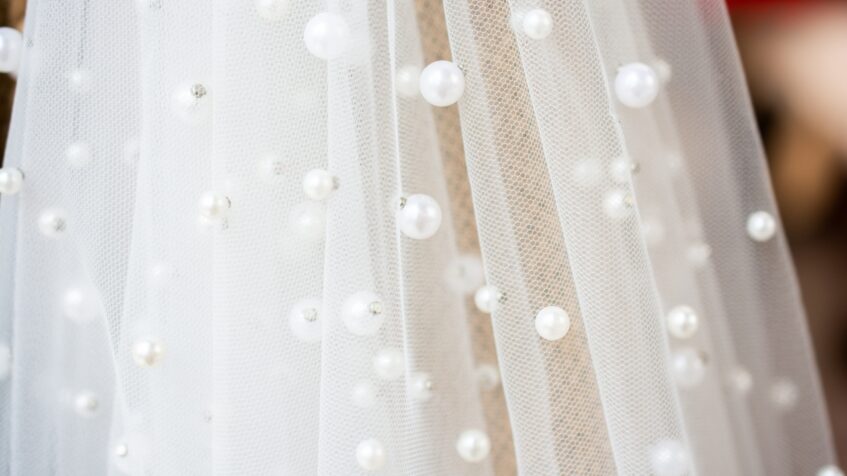
Metallic detail
Best use
Effect
Gold botanical details
Gowns with leaf, vine, or floral embroidery
Creates an opulent finish
Champagne shimmer
Candlelit receptions and evening ceremonies
Adds warmth and softness
Silver beading
Winter, evening, celestial, and modern weddings
Gives the gown a cool, polished shine
Pearl details
Lace, tulle, or satin gowns
Adds shine with a classic bridal feel
Bolder Color Options
Emerald, burgundy, deep teal, dark purple, red, crimson, and black create a dramatic bridal look.
How to Choose the Right Shade
Closing Thoughts