

In 2026, a realistic average dating time before marriage in the United States is roughly 3.5 to 6.5 years from first date to wedding day. No official government dataset tracks “first date to marriage” as one clean number, so the best estimate comes from dating-before-engagement surveys and current engagement-length data.
The Knot found that 53% of recently engaged couples dated 2 to 5 years before engagement, while average engagement length data from The Knot places the U.S. average at 15 months.
Zola’s 2026 First Look Report gives a slightly longer 18-month engagement average.
In plain terms, many couples now spend several years together before marriage, especially when cohabitation, career timing, housing costs, and wedding planning are part of the decision.
Average Dating Time Before Marriage: The Best 2026 Estimate

The clearest answer is that many couples marry after several years together, not after a few months. A common modern path looks like 2 to 5 years of dating, then about 1.25 to 1.5 years engaged, leading to a total relationship length of 3.5 to 6.5 years before marriage.
Relationship Stage
Best 2026 Estimate
What It Means In Real Life
Dating before engagement
Most commonly 2 to 5 years
Enough time for shared routines, conflict patterns, family exposure, and financial talks
Engagement before wedding
15 to 18 months
Enough time to plan, save, book vendors, and handle family logistics
First date to wedding
About 3.5 to 6.5 years
A practical range, not a rule
The main caveat: “average” can mislead. A couple in their mid-30s who already know they want children may move faster than a couple who met at 22 while still building careers.
Averages describe crowd behavior. They do not measure readiness.
Why There Is No One Official Number
No U.S. Census Bureau table records how long couples dated before marriage. Government data is stronger on age at first marriage, marital status, fertility, and cohabitation than on romantic timeline details.
The Census Bureau publishes historical marital status tables, including median age at first marriage, while the CDC’s National Survey of Family Growth gathers data on marriage, cohabitation, family formation, births, and reproductive health.
Wedding platforms fill part of the gap because they survey engaged and married couples. Their data is useful, but it has limits. Couples using The Knot, WeddingWire, Zola, or Bridebook may be more wedding-planning-oriented than couples who elope, marry at a courthouse, or skip large ceremonies.
So, the most honest answer is a blended estimate: use wedding-industry surveys for dating and engagement timelines, then use government and academic data for age, cohabitation, and broader marriage patterns.
How Long Do Couples Date Before Getting Engaged?
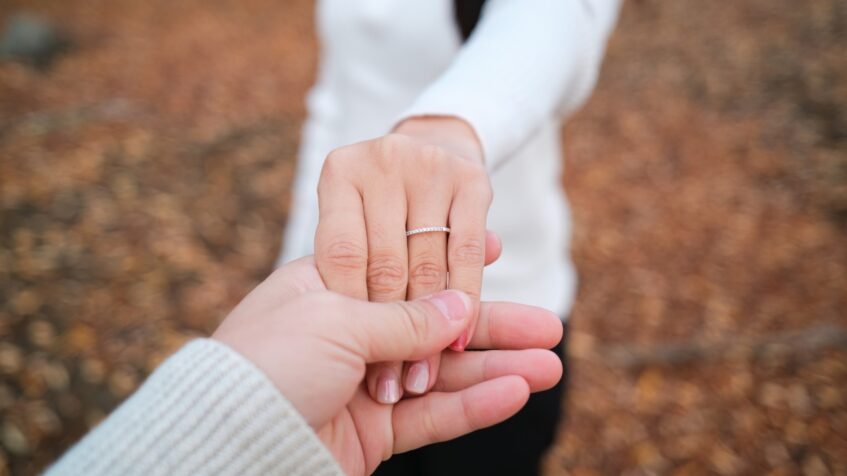
Most U.S. couples date 2 to 5 years before engagement, based on The Knot’s survey of nearly 8,000 recently engaged couples. The dating before engagement data found that 30% dated 2 years or less, 53% dated 2 to 5 years, and 17% dated 6 years or more before engagement.
That middle group matters. It shows that a 3-year or 4-year dating period is not unusually slow in 2026. In many relationships, year 1 proves attraction and basic compatibility. Year 2 reveals habits, conflict style, social circles, work stress, and money behavior.
Years 3 to 5 often become decision years: move in, relocate, buy property, combine finances, have children, or leave.
The shorter path can work, especially for older couples with clearer priorities. The risk is not speed by itself. The risk is skipping the conversations that marriage will force anyway.
How Long Are Couples Engaged Before Marriage?
View this post on Instagram
The average engagement lasts 15 to 18 months in current U.S. wedding data. The Knot reports a 15-month average engagement for U.S. couples in its 2025 Real Weddings Study. Zola’s 2026 First Look Report says average engagement length is holding at 18 months.
A longer engagement often reflects logistics rather than hesitation. Venue availability, guest travel, family budgets, deposits, religious calendars, visa issues, pregnancy plans, and high-demand wedding dates can all stretch the timeline.
Zola also reports that 68% of its couples mutually decide when to get engaged, 55% shop for rings together, and 19% enter full wedding-planning mode before a formal proposal. That detail changes the meaning of “engagement length.” Some couples are effectively planning marriage before the ring appears.
Age Matters More Than Many Timeline Articles Admit

Marriage timing in 2026 is tied closely to age. Recent ACS-based analysis from Bowling Green State University’s National Center for Family and Marriage Research found that median age at first marriage in 2024 reached 30.8 for males and 28.8 for females, the highest ACS levels recorded since 2008.
Over the last 5 years, the first marriage age has stayed around 30 for males and 28 for females, according to NCFMR marriage age data.
That means a couple who dates from ages 24 to 29 may appear “slow” compared with older norms, but they fit modern marriage patterns. Housing costs, student loans, career mobility, longer education timelines, and changing expectations around partnership all push marriage later.
Location matters too. NCFMR found wide state differences in 2024: Utah had among the lowest median ages at first marriage, while Washington, D.C., Massachusetts, California, and New York ranked high for women. A 2-year dating period can feel late in one social circle and early in another.
Cohabitation Has Changed The Dating Timeline
@stellakatombe You’ve probably heard of couples who lived together for years… yet divorced only a few years after getting married. So what’s really going on in these situations? 🤔 Join me LIVE this Sunday night with a special guest (@gloriaelendu_ ) as we unpack this conversation. Is this just an over-spiritualisation of a very human and natural process? Should marriage actually feel different from dating or cohabitation? Register for the LIVE and Let’s discuss. 👀 #christianmarriage #counselling #premaritalcounselling ♬ original sound – etherealcuts_
Living together before marriage is now a standard path for many couples.
NCFMR reported in 2026 that 80% of recent U.S. marriages from the 2020 to 2022 cohort were preceded by cohabitation, based on National Survey of Family Growth analysis. The group’s cohabitation prior to marriage report also notes a gradual long-term increase in women cohabiting before marriage.
Cohabitation can lengthen dating before marriage because couples may feel less urgency to formalize the relationship. Rent is shared, daily routines are already merged, and family expectations may be softer than in previous generations.
But living together does not answer every marriage question. A couple can share an apartment and still avoid discussions about debt, children, caregiving for parents, religion, surname changes, prenups, or relocation.
That is where many couples misread the timeline. Time together helps, but only when the relationship has faced adult decisions.
What People Usually Miss About “Average” Dating Time

People often ask whether they are behind. A better question is whether the relationship has produced enough evidence.
A couple dating for 18 months may have more useful information than a couple dating for 6 years if they have already handled job loss, family conflict, illness, moving, budgeting, and long-term planning. Another couple may spend 5 pleasant years together but never discuss children, debt, or where they want to live.
Marriage readiness is less about calendar length and more about tested compatibility. The safest answer is less exciting but more useful: do not marry only because a relationship has reached an average number of years.
A long timeline without honest talks is a delay, not preparation. Fast marriage is not automatically reckless, and long dating is not automatically wise. Each route has trade-offs. The popular “2-year rule” is too blunt. Two years can be enough for some couples and too short for others. A fixed deadline may help someone avoid wasting years with a partner who rejects marriage, but it can also create pressure before shared life has been tested. Average dating time before marriage in 2026 is best estimated at about 3.5 to 6.5 years from first date to wedding, with most couples dating 2 to 5 years before engagement and then staying engaged for 15 to 18 months. The number matters because it shows how modern couples are taking more time, planning more jointly, and often living together before marriage. Still, the average should guide expectations, not dictate choices. A healthy timeline is long enough to reveal real patterns and clear enough that both partners know where the relationship is going.
Fast Marriage Versus Long Dating – What Are the Consequences?
Timeline
Possible Advantage
Common Risk
Human Consequence
Under 1 year before engagement
Clear intent, less ambiguity
Limited exposure to stress
Hidden incompatibility may appear after legal commitment
1 to 2 years before engagement
Enough time for early patterns
Major life events may not have occurred yet
Works better for older couples with direct conversations
2 to 5 years before engagement
Matches the most common U.S. survey range
Pressure can build if goals differ
Good window for money, family, housing, and children talks
6+ years before engagement
More shared history
One partner may be waiting without clarity
Can be stable, or can mask avoidance
So, How Long Should You Date Before Marriage?