
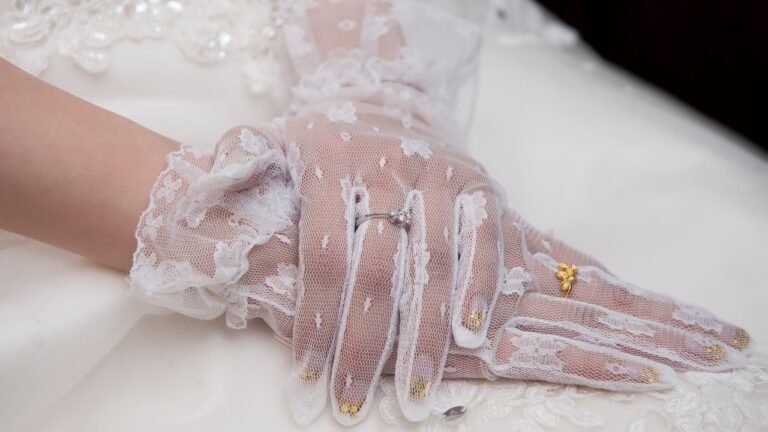
Bridal gloves are making a strong comeback as a modern wedding accessory, moving past a purely traditional role and becoming a deliberate fashion statement.
Search interest in lace wedding gloves increased 1,319% year over year, making gloves one of the defining Gen Z bridal accessories for 2026.
In 2026, gloves are being styled with more than classic gowns. Brides are pairing them with minimalist dresses, short bridal looks, jumpsuits, suits, satin gowns, and black-tie silhouettes.
A well-chosen pair of gloves can add elegance, texture, personality, and a more complete editorial finish to a bridal look.
Gloves also give brides an easy way to shift a look between the ceremony, portraits, and reception styling without changing into a second outfit.
1. Lace Gloves
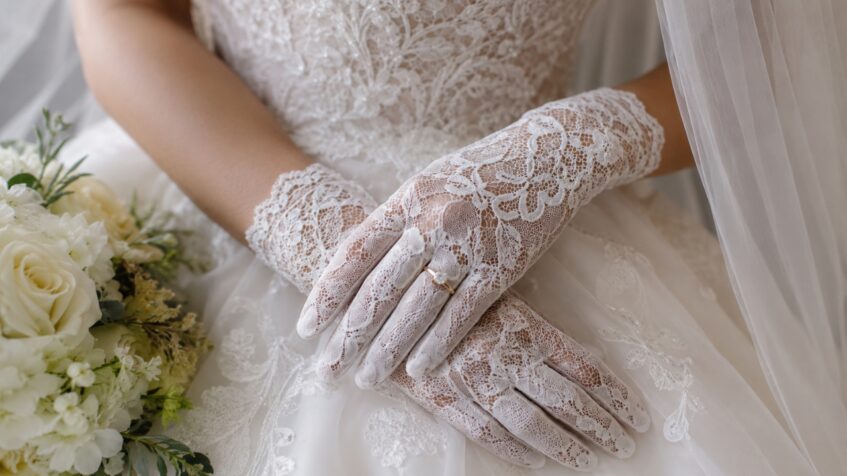
Lace gloves work beautifully for romantic, vintage, garden, boho, and gothic-inspired weddings.
Lengths can range between wrist, elbow, and opera styles, giving brides options for subtle detail or full drama.
Popular lace choices include delicate Chantilly, heavier guipure, floral tulle, embroidered organza, crochet lace, and Alençon-style lace.
Simple gowns often pair best with lace gloves because the texture can take center stage without competing against a heavily detailed dress.
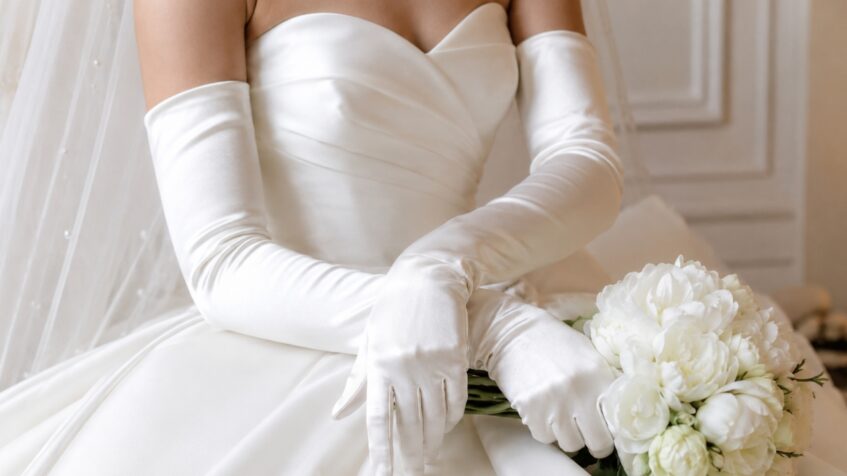
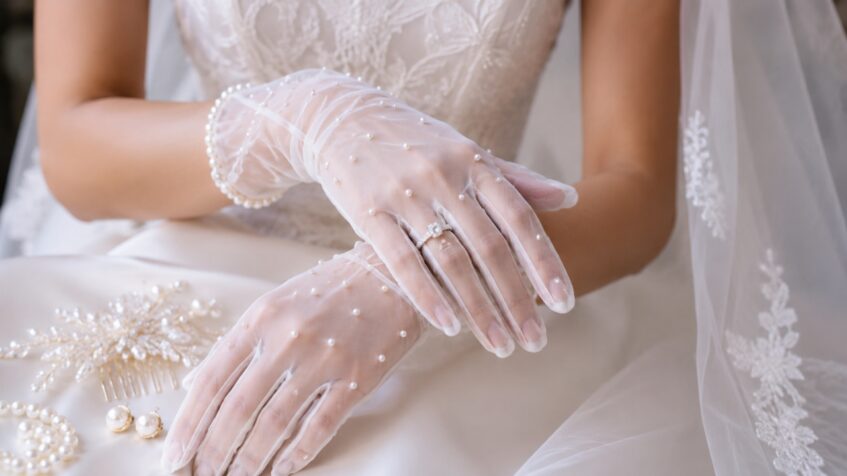
Carefully matched lace can also work with lace gowns, especially when pattern, color, and scale feel connected. For vintage or gothic styling, darker ivory or off-white lace can feel more intentional than stark white. Satin gloves suit classic, minimalist, Old Hollywood, and black-tie bridal looks. Smooth, luminous satin catches light beautifully, while gloves add a tailored and polished finish. Pair satin gloves with satin gowns, strapless dresses, structured silhouettes, mermaid gowns, ball gowns, or dresses with slits. A satin gown with gloves can feel polished, romantic, cinematic, and complete without relying on heavy accessories. For a cleaner finish, brides can match the sheen of the glove to the gown as closely as possible. A slightly different shine can still work, but the contrast should look deliberate rather than accidental. Sheer and tulle gloves work especially well for soft, modern, minimalist, spring, and summer weddings. Lightweight translucent fabric adds detail without making the look feel heavy. Pearl studs, bead accents, floral embroidery, and tonal embellishment can make sheer gloves feel delicate and current. Organza and tulle styles are strong choices for brides who want texture, movement, and visual interest without the weight of satin or heavy lace. Small embellishments can be especially effective on sheer gloves because the skin shows through the fabric. A few placed details can look refined, while heavy decoration can make the hand area feel busy. Fingerless gloves are ideal for practical brides who want their rings visible. Open fingers frame the engagement ring instead of hiding it, making these gloves useful for portraits and the ring exchange. Modern gowns, mini dresses, suits, jumpsuits, and longer wedding days all work well with fingerless styles. Fingerless lace gloves are especially practical for brides who want texture while keeping hand movement easy. Opera-length gloves suit dramatic, formal, traditional, and black-tie weddings. Gloves that extend above the elbow create a strong sense of formality and drama. Strapless, sleeveless, and off-the-shoulder dresses are natural pairings because bare arms give longer gloves enough visual space. Ballroom weddings, cathedral ceremonies, and upscale receptions are especially good settings for opera gloves. For comfort, stretch satin or spandex-mix fabrics can help create a secure fit. A bride planning to wear opera gloves for many hours should test sitting, hugging, holding a bouquet, and eating before the wedding day. Fit matters as much as style with longer gloves. Glove length should work with the dress neckline, sleeve shape, venue, and comfort needs. A short glove can feel fresh and casual, while a longer glove can make the same dress feel much more formal. Wrist-length gloves are subtle, versatile, and easy to style. Many brides choose them because they feel wearable and practical for long sleeves or high necklines, where the gap between sleeve and glove becomes part of the look. Elbow-length gloves feel elegant without becoming too dramatic. Mini dresses, reception looks, and outfits needing more structure than wrist gloves often pair well with this length. Opera-length gloves are bold and formal. Bare arms, strapless gowns, sleeveless gowns, and full-skirt silhouettes give them enough space to make an impact. The venue should also guide glove length. Longer gloves suit churches, formal venues, and black-tie weddings, while shorter gloves feel easier for registry office, outdoor, or reception styling. For several hours of wear, fingerless or wrist-length gloves are usually more comfortable. Minimalist gowns pair well with satin, sheer, pearl-detailed, or subtly embroidered gloves. Small details such as piping, pearl buttons, tonal embroidery, initials, or a wedding date can make minimalist gloves feel personal without overpowering the dress. Satin gowns look polished with satin gloves. Satin ball gowns feel regal, mermaid gowns feel sleek, and satin dresses with slits feel fresh and modern. Lace gowns need careful styling. Simple gloves often work best, but matched lace can look beautiful when the pattern and scale do not compete. Mini dresses can gain a stronger bridal feel through accessories rather than silhouette alone. Elbow-length lace or sheer gloves can make a short dress feel playful, polished, and modern. Column and fitted gowns often look best with wrist-length or fingerless gloves, which add detail without interrupting clean lines. Accessories should support the gloves instead of competing with them. Once gloves are added, hands and arms become part of the main styling area, so jewelry, veil, and hair pieces need careful balance. Match glove style to the overall mood of the outfit, not only the dress fabric. Pearl gloves can pair well with simple pearl earrings, pearl hair clips, a pearl choker, or a pearl veil. Avoid making every accessory heavily embellished, since too many statement details can make the look feel crowded. Bracelets usually do not work well with long gloves. Earrings, hair accessories, or a veil can carry the jewelry detail instead. Detailed gloves need minimal jewelry, especially opera gloves, lace gloves, and pearl-studded tulle gloves. Fingerless gloves, ring windows, and glove slits are practical options for the ring exchange. Custom details such as monograms, initials, or wedding dates can also make gloves feel more personal. Veil styling should focus on balance. A glove can sharpen the line of a dramatic veil, while a lace veil can soften the formality of satin gloves. Compare gloves, sleeves, veils, and jewelry together before making a final styling decision. Proportion, fabric, and movement can be hard to judge when each piece is viewed separately. Bridal gloves are one of the easiest ways to update a wedding look in 2026. Lace, satin, sheer, short, fingerless, and opera-length gloves all offer different styling possibilities, but the best choice should fit the dress, venue, season, and overall bridal style. Strong styling treats gloves as part of a complete fashion story, where dress, veil, jewelry, fabric, and silhouette all feel connected. Final takeaway: bridal gloves work best when they feel intentional, either as a finishing touch or as the main statement accessory.
2. Satin Gloves
3. Sheer or Tulle Gloves
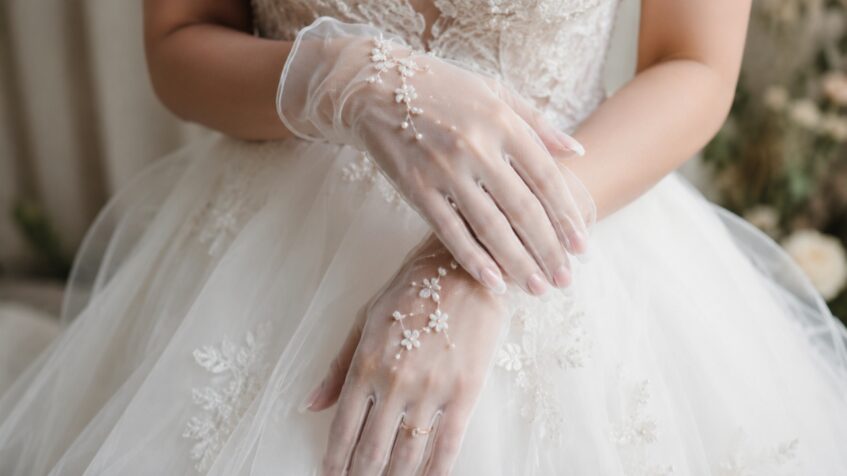
4. Fingerless Gloves
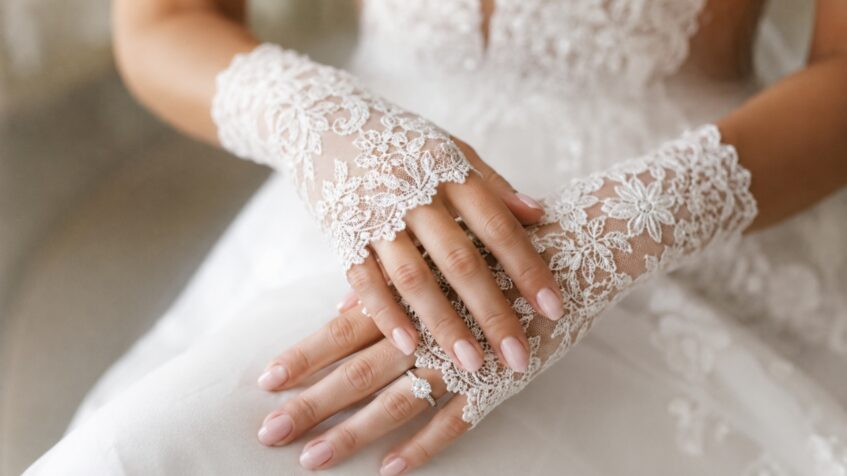
5. Opera-Length Gloves
How to Choose the Right Glove Length
Styling Bridal Gloves With Your Dress
Dress shape should lead the glove choice. Gloves can sharpen a simple gown, soften tailoring, add bridal detail to a short dress, or bring ceremony-level polish to a reception look.
How to Match Gloves With Accessories
Summary